

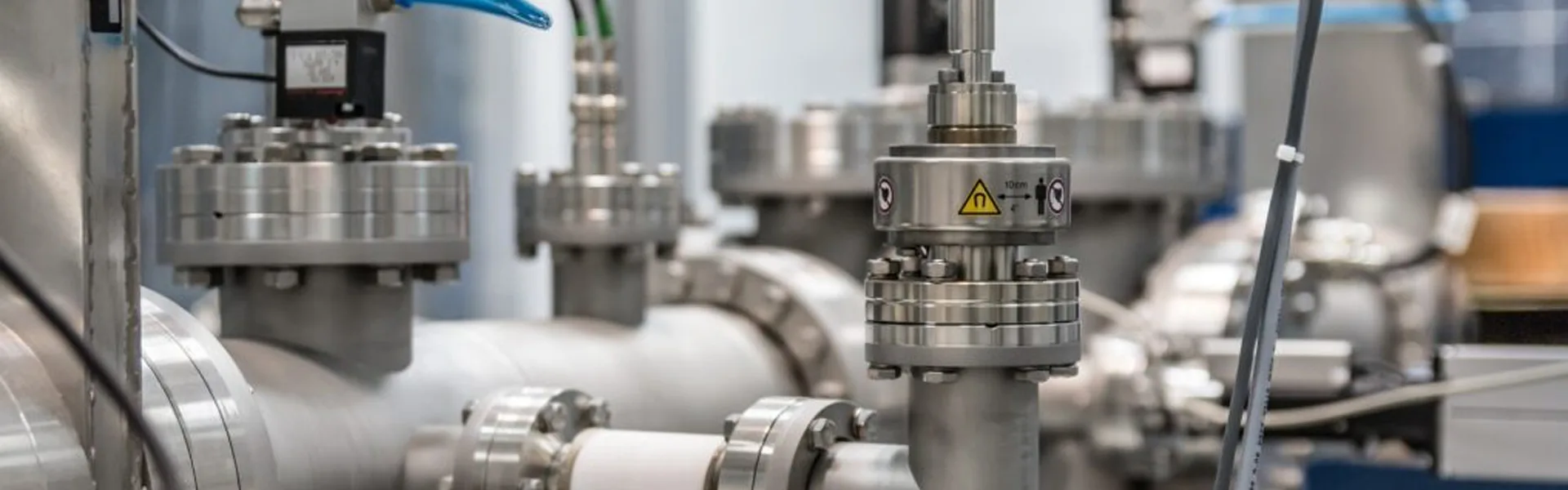
Progressive Cavity Pumps
Progressive cavity pumps (also called monopumps) work by a single-helix rotor turning inside a double-helix stator. The fluid is carried continuously and without pulsation in advancing sealed cavities. The catalog includes ten different series.
-
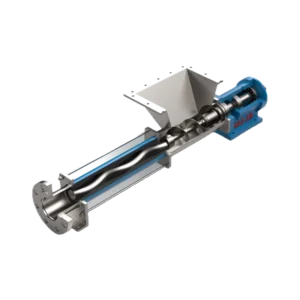 AH Series
- Flow Rate up to 50 m³/h
- Pressure up to 18 bar
-
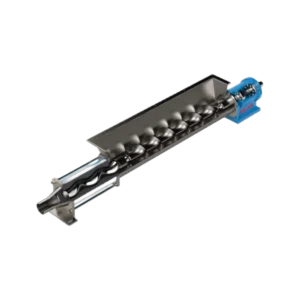 BAH Series
- Flow Rate up to 20 m³/h
- Pressure up to 6 bar
-
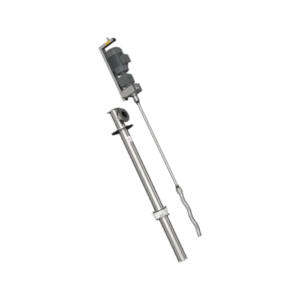 DK Series
- Flow Rate up to 50 m³/h
- Pressure up to 24 bar
- Immersion Length 1 – 8 m
-
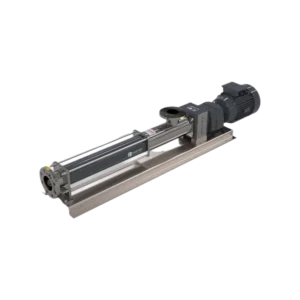 ECO Series
- Capacity Range 1 l/h (1 bar) – 75,000 l/h (24 bar)
-
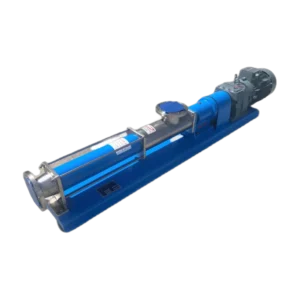 FL Series
- Flow Rate up to 200 m³/h
- Pressure up to 24 bar
- Max. Suction Lift 8 m
-
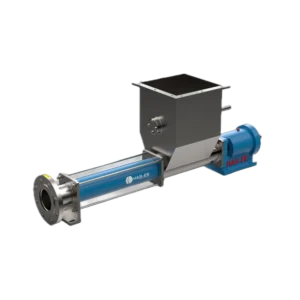 KR Series
- Flow Rate up to 20 m³/h
- Pressure up to 18 bar
-
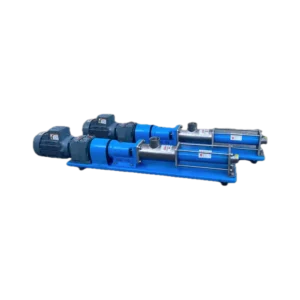 MN Series
- Flow Rate up to 4 m³/h
- Pressure up to 24 bar
- Max. Suction Lift 4 m
-
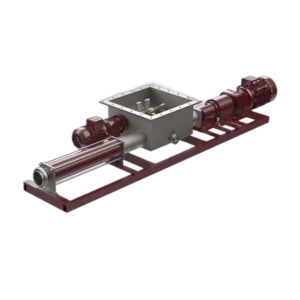 PH Series
Explore
PH Series
Explore
-
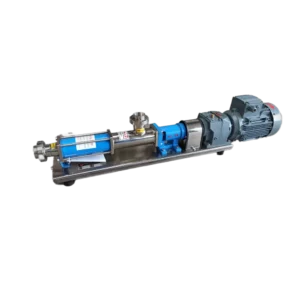 RK Series
- Flow Rate up to 30 m³/h
- Pressure up to 24 bar
- Max. Suction Lift 4 m
-
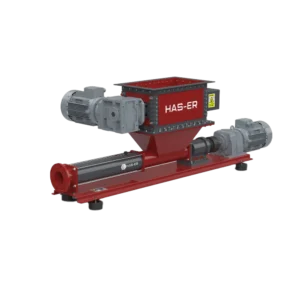 SH Series
- Flow Rate up to 50 m³/h
- Pressure up to 24 bar
There are no products matching your search on this page. Clear the filter or change the category.
About Progressive Cavity Pumps
What sets this design apart is that it moves the fluid without crushing it: because shear is low, products containing solid particles, fibres, viscous media and shear-sensitive goods are transferred without their structure breaking down. Flow is proportional to speed and pulsation-free, which also suits dosing applications. Sludge, wastewater, food products, paints and polymer transfer are typical uses.
Series in our catalog offer flow rates from 4 m³/h to 200 m³/h and pressures of 6–24 bar; the capacity range runs from 1 l/h (at 1 bar) to 75,000 l/h (at 24 bar). Suction lift is 4–8 m, and in submersible applications the immersion depth is 1–8 m. In the shredder-coupled hopper option, solids are reduced to a size that can pass through the pump; it is designed for transferring organic waste and products such as fish and poultry.
The most critical operating rule is never to run dry: without lubrication the stator elastomer is damaged quickly. For a comparison with gear and lobe alternatives, see our viscous fluid transfer guide.