

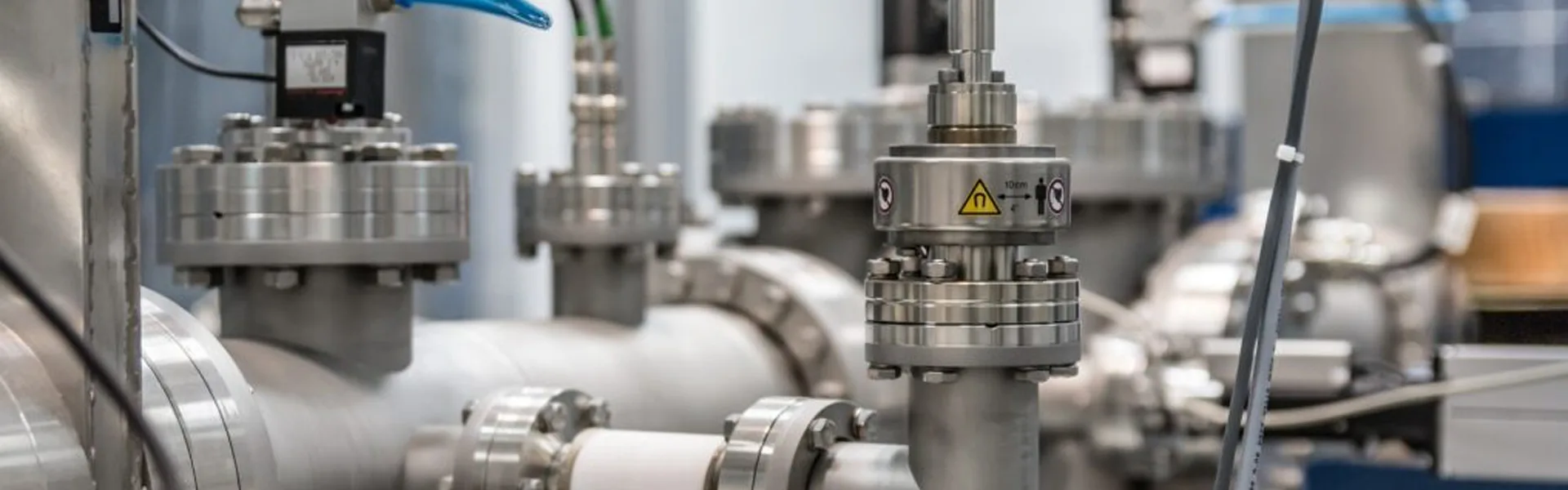
Gear and Lobe Pumps
Gear and lobe pumps are positive displacement machines: each revolution moves a fixed volume, so with viscous and oily liquids their flow stays almost independent of pressure. The catalog covers three constructions — helical gear, internal gear and lobe.
-
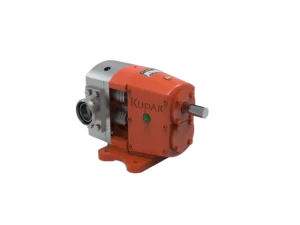 "KLP2" Lobe Pump
- Maximum Flow Rate 9 m³/h
- Flow Rate 0.333 L/rev
- Pressure Range 2–14 bar
-
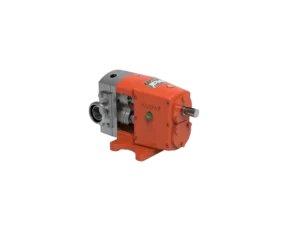 KLP 1½" Lobed Pump
- Maximum Flow Rate 3,6 m³/h
- Flow Rate 0.125 L/rev
- Pressure Range 2–14 bar
-
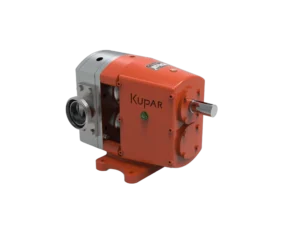 KLP 2½" Lobe Pump
- Maximum Flow Rate 20 m³/h
- Flow Rate 0.667 L/rev
- Pressure Range 2–14 bar
-
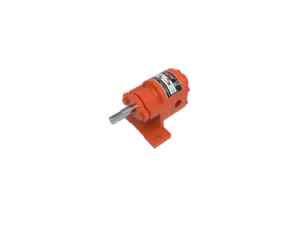 KHP½" Helical Gear Pump
- Maximum Flow Rate 0,54 m³/h
- Flow Rate 0.006 L/rev
- Pressure Range 1–14 Bar
-
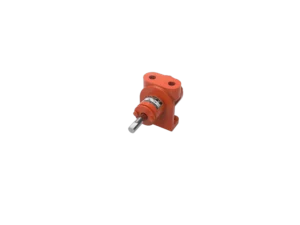 KIPK⅜“ Internal Gear Pump
- Maximum Flow Rate 0,175 m³/h
- Flow Rate 0.002 L/rev
- Pressure Range 2–14 bar
-
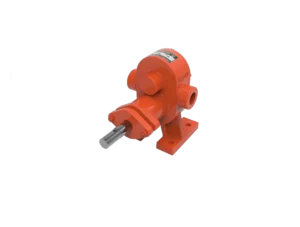 KHP¾" Helical Gear Pump
- Maximum Flow Rate 3,5 m³/h
- Flow Rate 0.040 L/rev
- Pressure Range 1–14 Bar
-
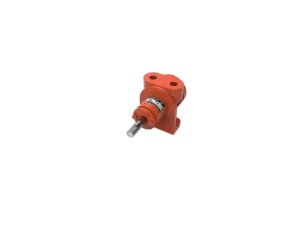 KIP⅜“ Internal Gear Pump
- Maximum Flow Rate 0,35 m³/h
- Flow Rate 0.004 L/rev
- Pressure Range 2–14 bar
-
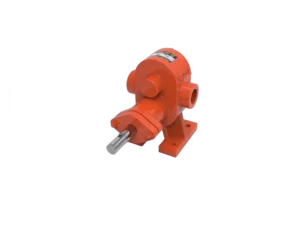 "KHP1" Helical Gear Pump
- Maximum Flow Rate 5,2 m³/h
- Flow Rate 0.058 L/rev
- Pressure Range 1–14 Bar
-
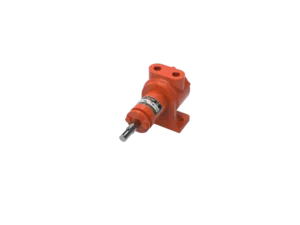 KIPK½” Internal Gear Pump
- Maximum Flow Rate 0,9 m³/h
- Flow Rate 0.001 L/rev
- Pressure Range 2–14 bar
-
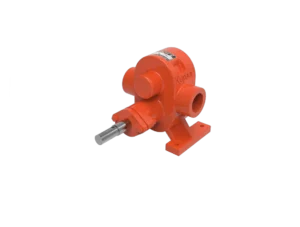 KHP 1½" Helical Gear Pump
- Maximum Flow Rate 11,25 m³/h
- Flow Rate 0.125 L/rev
- Pressure Range 1–14 Bar
-
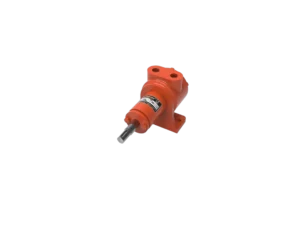 KIP½” Internal Gear Pump
- Maximum Flow Rate 1,5 m³/h
- Flow Rate 0.017 L/rev
- Pressure Range 2–14 bar
-
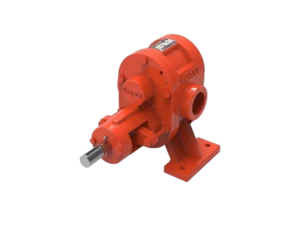 "KHP2" Helical Gear Pump
- Maximum Flow Rate 25 m³/h
- Flow Rate 0.417 L/rev
- Pressure Range 1–14 Bar
-
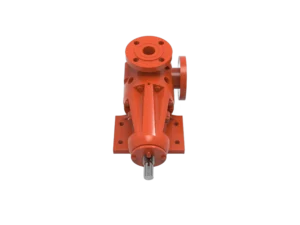 "KIP1" Internal Gear Pump
- Maximum Flow Rate 2 m³/h
- Flow Rate 0.033 L/rev
- Pressure Range 2–14 bar
-
 "KIP1"-Y Internal Gear Pump
- Maximum Flow Rate 2 m³/h
- Flow Rate 0.033 L/rev
- Pressure Range 2–14 bar
-
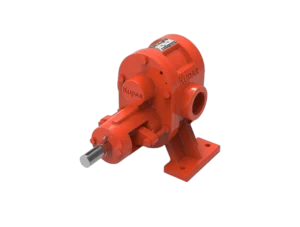 KHP 2½" Helical Gear Pump
- Maximum Flow Rate 35 m³/h
- Flow Rate 0.583 L/rev
- Pressure Range 1–14 Bar
-
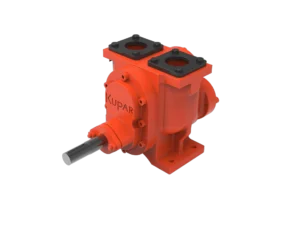 KCP 2½" Helical Gear Pump
- Maximum Flow Rate 30 m³/h
- Flow Rate 0.583 L/rev
- Pressure Range 1–14 Bar
-
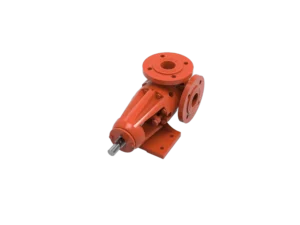 KIPK 1½” Internal Gear Pump
- Maximum Flow Rate 4 m³/h
- Flow Rate 0.067 L/rev
- Pressure Range 2–14 bar
-
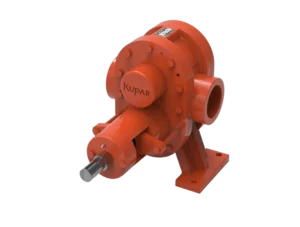 "KHP3" Helical Gear Pump
- Maximum Flow Rate 50 m³/h
- Flow Rate 0.833 L/rev
- Pressure Range 1–14 Bar
-
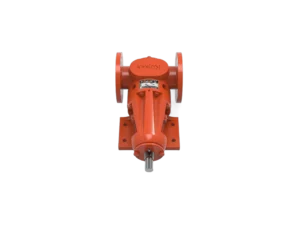 KIPK 1½”-Y Internal Gear Pump
- Maximum Flow Rate 4 m³/h
- Flow Rate 0.067 L/rev
- Pressure Range 2–14 bar
-
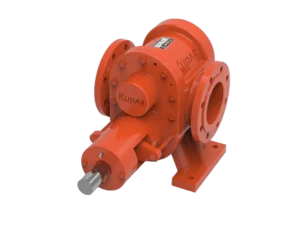 "KHP4" Helical Gear Pump
- Maximum Flow Rate 75 m³/h
- Flow Rate 1,250 L/rev
- Pressure Range 1–14 Bar
-
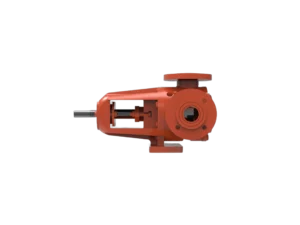 KIP 1½” Internal Gear Pump
- Maximum Flow Rate 3,5 m³/h
- Flow Rate 0.123 L/rev
- Pressure Range 2–14 bar
-
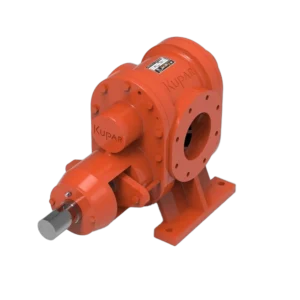 "KHP6" Helical Gear Pump
- Maximum Flow Rate 95 m³/h
- Flow Rate 3,958 L/rev
- Pressure Range 1–14 Bar
-
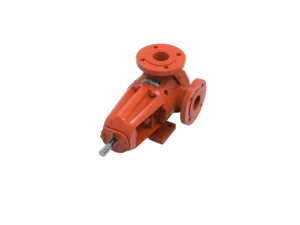 "KIPK2" Internal Gear Pump
- Maximum Flow Rate 7,5 m³/h
- Flow Rate 0.263 L/rev
- Pressure Range 2–14 bar
-
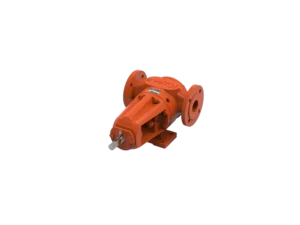 "KIPK2-Y" Internal Gear Pump
- Maximum Flow Rate 7,5 m³/h
- Flow Rate 0.263 L/rev
- Pressure Range 2–14 bar
There are no products matching your search on this page. Clear the filter or change the category.
About Gear and Lobe Pumps
The efficiency of a centrifugal pump falls sharply as viscosity rises; in gear and lobe pumps the fluid is trapped in the cavities between teeth or lobes and carried to the discharge side. This is why they are chosen for oils, resins, molasses, adhesives, paints and polymers. Flow is proportional to speed, so precise adjustment is possible through speed control.
Models in our catalog offer connections from ½" to 6", maximum flow from 0.54 m³/h to 20 m³/h and a pressure range of 1–14 bar. The temperature range is 20–200 °C and viscosity capacity is 100–25,000 cP; displacement per revolution varies between 0.006 L/rev and 0.667 L/rev.
Casing and gear materials are available in GG25 cast iron, AISI 316 stainless steel and bronze. Bearings are bronze, carbon-filled PTFE or rolling element; sealing is configured as soft packing, mechanical seal or lip seal. A heating jacket can be added for hot or freeze-prone fluids, and a strainer and by-pass for line protection.
The lobe design suits products carrying solid particles and sensitive to shear (food, cosmetics); the internal gear design runs quietly and without vibration at high viscosity. For why the three constructions diverge with different fluids see our viscous fluid transfer guide, and for material compatibility our chemical compatibility chart.